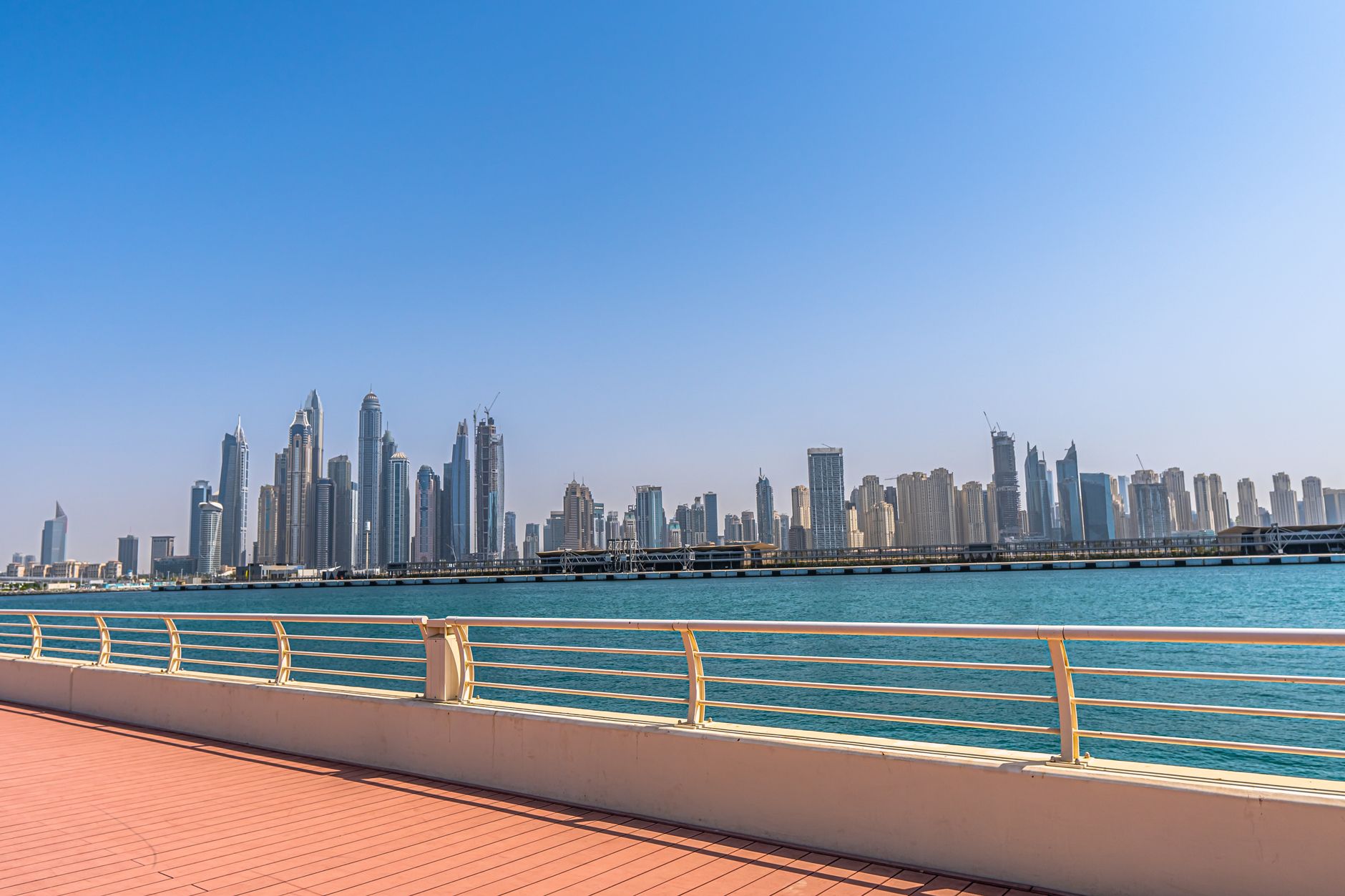
Ethiopia and the UAE are moving closer by the month. Emirati capital is flowing into Ethiopian agriculture, energy and logistics, Dubai's trade bodies have been holding meetings in Addis Ababa, and Ethiopian Airlines connects the two economies with some of the busiest African routes into the Gulf. For Ethiopian entrepreneurs, exporters and the global diaspora, Dubai increasingly looks like the natural offshore base.
At the same time, Ethiopia's foreign exchange regime, long one of the most restrictive in Africa, is opening up faster than at any point in a generation. The July 2024 reforms (Directive FXD/01/2024) floated the birr and consolidated the forex rules, and the National Bank of Ethiopia's February 2026 amendments (Directive FXD/04/2026) went further than many thought possible, including, for the first time, a route for Ethiopian businesses to invest abroad with NBE approval.
This guide explains what is now possible, what is still not, and how the realistic Dubai strategies differ depending on whether you are an exporter in Addis, a service business earning abroad, or part of the diaspora in Washington, London, Jeddah or Dubai itself. It is general information, not financial, tax, legal or investment advice. Ethiopian forex directives are changing rapidly, and NBE approval processes are case-by-case; take professional advice before acting.
First, an honest starting point: the birr is not freely movable
Ethiopia still operates capital controls. An Ethiopian resident cannot simply convert birr savings and wire them to Dubai, and no reputable adviser should suggest otherwise. Informal transfer channels exist, but using them breaches Ethiopian law, and money that arrives in the UAE without a documented trail will struggle to pass Emirati bank compliance anyway. The strategies below all work within the rules, which is the only version of this that protects your wealth rather than endangering it.
What has changed is the number of legal doors now open. Under the reforms, exporters can retain their hard-currency earnings, service exporters can keep 100 percent of proceeds in forex accounts indefinitely, forex accounts have become far easier to open, residents may remit limited amounts abroad for family support with documentation, and, most significantly, outward investment by Ethiopian entities is now permitted on a case-by-case basis with prior NBE approval. Each of these creates a legitimate pathway that simply did not exist three years ago.
Who this guide is really for: three profiles
The exporter. Coffee, oilseeds, horticulture, textiles, minerals: if your business earns foreign currency, the retention rules now let you hold it in forex accounts rather than surrendering it. That retained hard currency is the natural funding source for an international expansion.
The service business and remote earner. Ethiopian tech firms, consultants, logistics operators and creatives earning from foreign clients can now retain those proceeds fully. Many are structuring their international client-facing operations offshore from the outset.
The diaspora. Ethiopians abroad, including foreign nationals of Ethiopian origin, already hold their wealth in hard currency outside Ethiopia's capital controls. For this group, the Ethiopian forex rules are not the constraint at all, and the Dubai options open up completely.
Option 1: A UAE company as your international base
For Ethiopian businesses with foreign earnings, a Dubai or Abu Dhabi Free Zone company is usually the most practical first step. It gives you 100 percent foreign ownership, a trade licence typically issued within days, access to tier-one banking, and residence visas for you and your family, with the whole process manageable remotely.
The strategic logic is strong for Ethiopia specifically. Dubai sits at the centre of the trade lanes Ethiopian exporters already use, from re-export markets in the Gulf to buyers in Asia and Europe. Invoicing international clients through a UAE entity means earning and holding hard currency in a stable banking system, while the Ethiopian operating company handles production and local activity.
Pros. Hard-currency revenue accrues offshore legitimately from the start. A UAE residence visa comes with the setup, which simplifies travel and banking considerably for Ethiopian passport holders. Setup costs start from a few thousand dollars, modest against the structural benefit.
Cons. Where an Ethiopian entity is investing capital into the UAE company, NBE approval for the outward investment is required, and the process is new, discretionary and case-by-case; build in time and professional support. Ethiopian tax obligations on residents and on Ethiopian-source income continue to apply, and transfer pricing between your Ethiopian and UAE entities must be commercially defensible. The UAE also levies 9 percent corporate tax on profits above AED 375,000, with qualifying Free Zone income potentially at 0 percent, so structure matters.
Who it suits. Exporters and service businesses with genuine international revenue, and any diaspora founder building for African and Gulf markets.
Option 2: Dubai property
For the diaspora especially, Dubai property offers what Ethiopian assets cannot: a hard, dollar-pegged, income-producing asset with residency attached. Gross rental yields typically run 5 to 8 percent, there is no local income, capital gains or annual property tax, and holdings of AED 2 million or more (around USD 545,000) qualify for the 10-year Golden Visa.
Pros. Tangible dollar asset, rental income, long-term family residency, and a base three hours' flight from Addis Ababa.
Cons. Concentration in one cyclical market, transfer fees around 4 percent, service charges, developer risk on off-plan units, and slower exits in downturns. UAE succession rules differ from Ethiopian and Western expectations, so a DIFC will or equivalent is essential. For Ethiopian residents, funding a property purchase from Ethiopia requires a lawful forex source, which in practice means retained export earnings, NBE-approved outward investment or diaspora funds; there is no shortcut.
Who it suits. Diaspora investors with capital already offshore, and established exporters using retained earnings with proper approvals.
Option 3: An offshore investment portfolio
For diaspora Ethiopians, a globally diversified portfolio on an international platform remains the sensible foundation before anything more concentrated: liquid, low-cost and spread across markets rather than parked in one flat in one emirate. For Ethiopian residents, this option depends entirely on having lawfully held foreign currency; it is a destination for legitimate hard-currency earnings, not a way around the controls.
Option 4: Residency and the longer game
A UAE Free Zone company brings a renewable investor residence visa; the Golden Visa offers 10 years via property or business investment, with no minimum stay, meaning you can hold it while continuing to live and operate in Ethiopia. For Ethiopian families, the practical value is optionality: guaranteed access to a stable jurisdiction, easier global travel logistics, dollar-based banking, and schooling options, without necessarily emigrating.
One caution that applies everywhere: a UAE visa does not change your tax position by itself. Where you are tax resident, and where your income is taxable, follows from your actual circumstances and each country's rules, not from the visa in your passport.
Common mistakes to avoid
Moving funds through informal channels and discovering the money is unbankable in Dubai. UAE banks scrutinise source of funds closely, and undocumented transfers fail that test.
Treating the new outward investment route as a formality. NBE approval is case-by-case and discretionary; applications need proper preparation.
Setting up a UAE company with no commercial substance and expecting it to hold up to scrutiny in either country.
Ignoring succession planning on Dubai assets.
Leaving document authentication late. Legalising Ethiopian corporate and personal documents for UAE use takes time; begin well before you need them.
The bottom line
Ethiopia's opening and the UAE's pull are converging, and the entrepreneurs best placed to benefit are those who move early through the legal doors: retained export earnings, offshore-earned service income, diaspora capital, and the new NBE-approved outward investment route. A UAE company is usually the first practical step, property and the Golden Visa the second, and full relocation a decision for later, if ever. In every case, documentation is the strategy. Get the structure and approvals right, and Dubai becomes a genuine platform for Ethiopian ambition rather than a compliance risk.
Frequently Asked Questions
Can Ethiopians legally invest in Dubai?
Yes, through defined routes: diaspora funds held abroad, retained export and service earnings, and, since the 2026 NBE reforms, outward investment by Ethiopian entities with case-by-case NBE approval. Ethiopian residents cannot freely convert and transfer birr savings abroad.
Can an Ethiopian open a company in Dubai?
Yes. Free Zone company formation is open to Ethiopian nationals, can be completed remotely in days, and includes an investor residence visa. Setup packages start from a few thousand US dollars.
Do Ethiopians qualify for the Dubai Golden Visa?
Yes. The main routes are property of AED 2 million or more, business investment, or professional and talent categories. Nationality is not a barrier; lawful, documented funds are the real test.
What changed in Ethiopia's forex rules?
The July 2024 reform (Directive FXD/01/2024) floated the birr and consolidated the rules; the February 2026 amendments (Directive FXD/04/2026) let service exporters retain 100 percent of proceeds indefinitely, eased forex account opening, allowed limited documented family remittances, and opened NBE-approved outward investment for Ethiopian entities for the first time.
Is it safe to use informal channels to move money to Dubai?
No. It breaches Ethiopian exchange control law, and undocumented funds routinely fail UAE bank compliance, leaving money stranded outside the formal system at both ends. Every strategy in this guide works within the rules.
Sources
- Directive FXD/01/2024 — floating the birr / FX reform — National Bank of Ethiopia
- Directive FXD/04/2026 — outward investment amendment — National Bank of Ethiopia
- UAE Golden Visa — official portal — The Official Portal of the UAE Government
- UAE corporate tax — UAE Federal Tax Authority